

A New Chapter After the Final Flight
For most travelers, their encounter with an airplane ends at the gate. You get off, collect your luggage, and a little later the aircraft disappears again toward the runway. But at some point, the active service life of a commercial aircraft also comes to an end.
During dismantling, individual components can be preserved and begin a second chapter. Airplane windows, trolleys, galley boxes, instruments, or parts of the cabin find their way to aviation fans and collectors. A technical component becomes aviation memorabilia – connected to the history of an aircraft, countless miles flown, and memories of travel.
What Does Aviation Memorabilia Mean?
The term “memorabilia” refers to objects that are collected because of their origin or their connection to certain events, places, or eras. In aviation, the spectrum ranges from historic tickets and airline documents to components from former aircraft.
Original components from flight operations are particularly interesting. An airplane window may have crossed continents and oceans for years, an airline trolley was moved through the cabin, and a sign was part of a real commercial aircraft. This past gives the objects their individual character.
Which Original Aircraft Parts Are Collected?
Aviation memorabilia ranges from small keepsakes to larger interior pieces. Typical collectibles include:
-
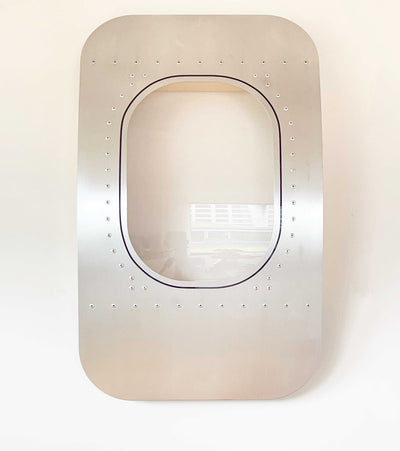
Airplane windows and parts of the outer skin
-
Airline trolleys and galley boxes
-
Cabin and safety signs
-
Cockpit instruments and controls
-
Data plates and plaques
-
Parts of seats and cabin interiors
-
Airline tableware, tickets, and historic documents
Original components have a direct connection to aviation. Visible signs of use can be part of this history and serve as a reminder that an object has already been in service for many years.
The Story Behind the Aircraft
For aviation fans, it is often not only the component itself that is interesting, but also its origin. If the aircraft type is known or a part can even be assigned to a specific aircraft, the collectible gains an additional story.
A Boeing 747, for example, represents a defining era of international long-haul travel. For many travelers, the Jumbo is associated with long-distance journeys, major airports, and the beginning of a holiday. A component from such an aircraft preserves a small part of this history.
A traceable origin can therefore make aviation memorabilia particularly interesting. Registration, aircraft type, or former airline make it possible to learn more about the previous life of a component.
Signs of Use Are Part of the Story
Small scratches, different surface textures, or age-related marks on a former aircraft part can tell the story of its previous use. Two components from the same aircraft type may therefore look similar at first, but on closer inspection each has its own character. For collectors and aviation fans, this can be precisely what makes them so appealing: You are not just looking at an object, but at a piece of material that has already been part of countless journeys.
From Aircraft Part to Interior Piece
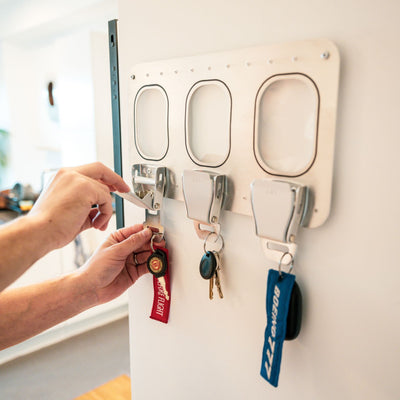
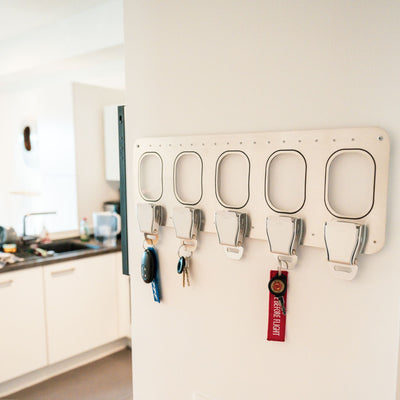
Today, aviation memorabilia also finds its place outside traditional display cabinets. Larger components can be combined with modern interior design while bringing a connection to travel and aviation into the living space. An airplane window, for example, can become the centerpiece of a travel wall. An airline trolley can be integrated as a bar or storage space, while a galley box can find its place on a shelf. Combined with wood, metal, travel photography, plants, or personal holiday memories, this creates an interior style that incorporates aviation in a subtle way. In this way, aviation history becomes part of your own home – and a former technical component becomes an object that can awaken wanderlust and memories.
Aviation Memorabilia as a Personal Memory
People associate very different stories with airplanes. A first long-haul flight, a special journey, pilot training, or many years of working above the clouds can give an original aircraft part a very personal meaning.
That is why such pieces can also make a gift for pilots, flight attendants, technicians, or aviation fans – for example, after passing a pilot’s license, for a professional milestone, a birthday, or retirement from active aviation. What matters is less the practical use than the story the recipient associates with aviation.
Do Original Aircraft Parts Become More Valuable?
Original aircraft parts can have collectible value, but a future increase in value cannot be predicted in general terms. Aircraft type, origin, condition, rarity, documentation, and demand can influence how an object is valued on the market. When choosing aviation memorabilia, you should therefore pay particular attention to traceable information about its origin. Especially when a seller uses terms such as “original” or assigns a component to a specific aircraft, it should be clearly apparent what these claims are based on.
A Piece of Aviation History for Your Home
Aviation memorabilia combines technology, history, and emotion. An airplane window recalls the view above the clouds, a trolley the atmosphere of an aircraft cabin, and a component from a well-known aircraft a particular era of aviation.
For aviation fans and travel enthusiasts, this becomes more than just wall decoration. It is a piece of the past that can tell new stories – and perhaps, with just one look, remind you of what that moment feels like when the airplane accelerates, takes off, and the next journey begins.
![[AI] Flugzeug Bord Boxen für Wohnzimmer Schlafzimmer Büro und zu Hause](http://aircraftwindows.de/cdn/shop/articles/Flugzeug_Bord_Boxen_fur_Wohnzimmer_Schlafzimmer_Buero_und_zu_Hause.png?v=1791476944&width=1254)